
Why the Planet Is Boiling
The Political Economy of Extinction — Versus a New Enlightenment
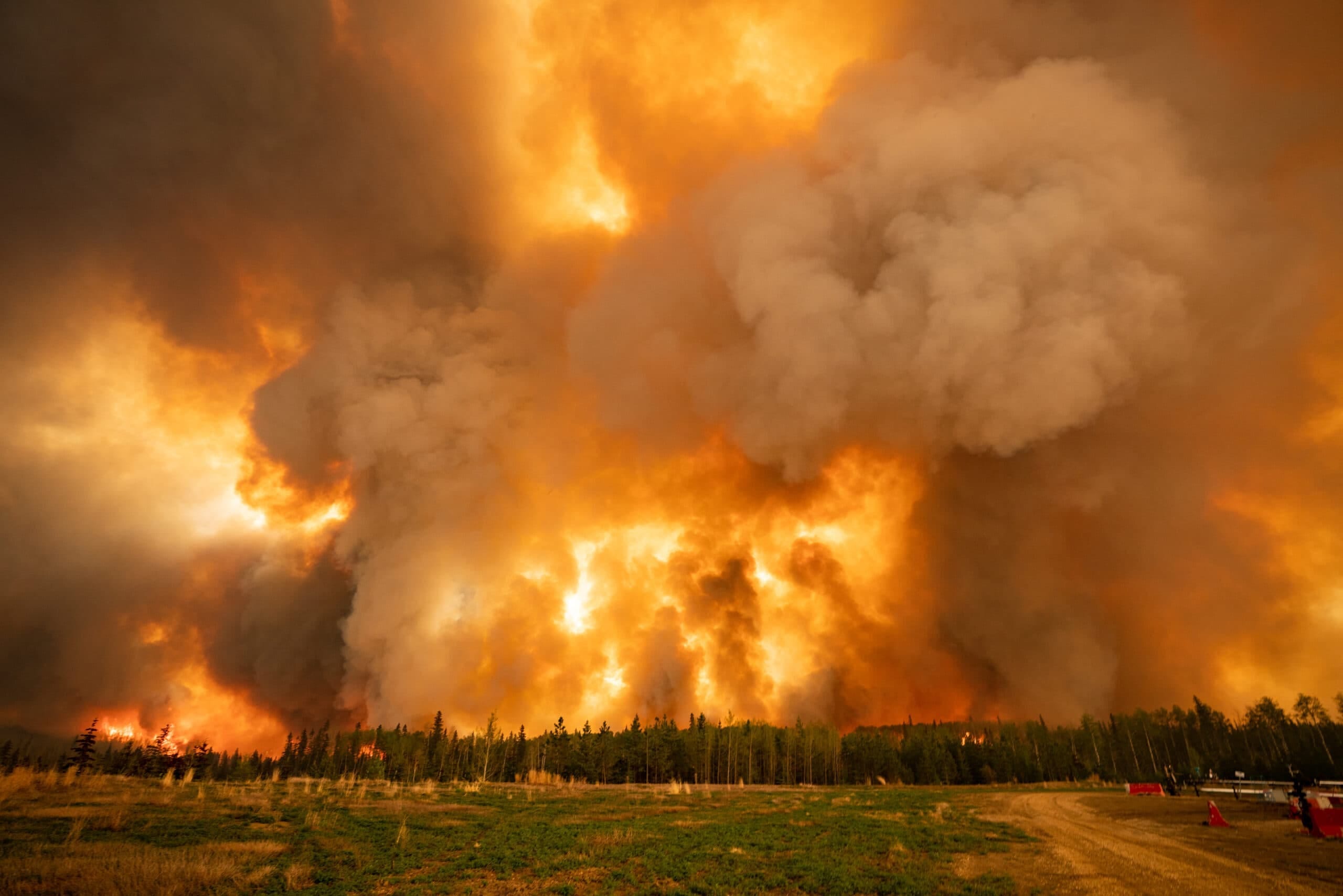
Call it boiling point. The hottest days in over 100,000 years. Scientists increasingly concerned we’re hitting tipping points. Vast swathes of the globe on fire, overheating, burning. So why is the planet boiling?
Have you heard Beethoven’s Fifth? Da da da DUMMM. You know the one. Think of that theme for a moment. It’s a lesson in…how simplicity…is the most complex thing of all. It’s just two notes — da, and dum. They’re right next to each other on the scale, no less. It’s just four strikes. And yet, it’s immortal. What does Beethoven do next, after the historic two-note four-strike opening? He develops the theme — but again, just barely altering it. Da da da dumm da da da dumm da da dummm. Da da da dumm da da da dumm da da da dumm. The whole symphony is just the — what we call the musical motif — repeated, more or less, in different ways. Think of how astonishing that is.
From simplicity comes complexity.
I raise that example because answering this question — why is the planet boiling — is the same kind of thing. Simple. Two notes, four strikes. Four words. Carbon emissions aren’t falling. But within that hides a deceptive level of complexity.
By now, even a child should be able to understand the four word, Beethoven’s Fifth opening level answer to why is the planet boiling — and indeed, many do, better than adults, which we’ll return to. Carbon emissions aren’t falling.
But that only raises the question: why not? And the answer to that leads us into a jungle, my friends, of conflict, power, folly, greed. It paints a portrait of how civilizations collapse.
Why aren’t carbon emissions falling? The answer to that question goes like this: as a civilization we have made no serious attempt, economically, socially, or politically, to make them fall. And so they go right on rising. Let me explain what I mean, and I dont’ mean to disparage at all the hard work that many brave people have put in trying to make it happen. I’m just observing, like an economist, what is happening in the real world: emissions aren’t falling.
They are going right on rising. Only now? The stakes couldn’t be higher. We appear to have suddenly crossed a threshold, into a new phase of warming. Tipping points appear to be hit, or destabilizing effects appear to be shattering models and predictions and forecasts, which is why scientists are ripping their hair out, trying to get anyone to listen.
So. Let me tell you what the economist in me sees. What would be the simplest way to begin limiting emissions? A carbon tax. We barely have a single country on earth that has a carbon tax — and we’re at the threshold of catastrophic levels of warming, LOL. The UK announced one, and it backed out. America, LOL, has never gotten close. The EU has perhaps the closest thing to one, in a rich country — a “cap and trade scheme,” which means that carbon permits can be bought and sold, but that’s not really the same thing as a hard tax, because of course there are many ways to game that system, like buying carbon credits in poor countries, by planting trees, for example, which never really get planted, or nobody monitors it, and so forth.
The EU’s just decided, finally, to put in place a carbon border tax, and that’s a little closer — that means it’ll tax imports according to how much carbon’s been emitted by producing them. Good idea? Great idea, and more to the point, a necessary idea.
And yet, to give you some example of how backwards we are as a civilization, this is the upper limit of where we are in terms of progress, and it’s not even in place yet.
Keep reading with a 7-day free trial
Subscribe to HAVENS to keep reading this post and get 7 days of free access to the full post archives.