
Why Britain’s NHS is Dying — And Why It’s a Warning to the World
The Willful Destruction of the World’s First Modern Healthcare System Is a Shocking, Historic Tragedy
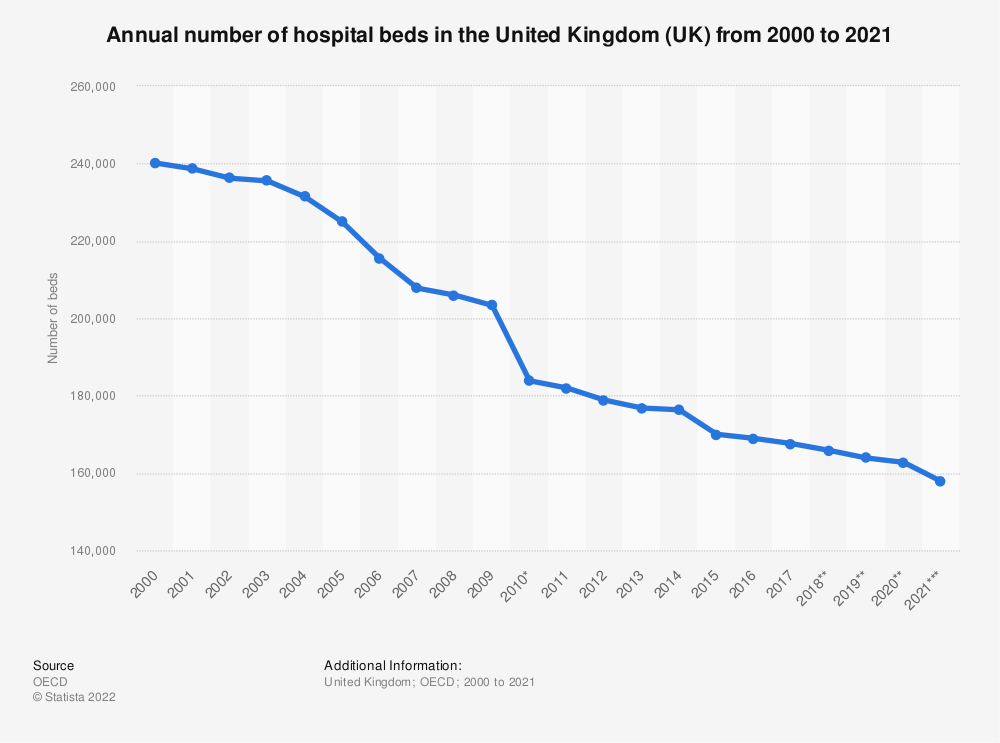

Sigh. It’s another day when I’m going to have to write about Britain. There are plenty of articles making the headlinesabout the NHS. How parlous a state it’s in. Some are good, and some are bad, but none of them really get to the heart of the matter, which is as simple as it is dire. Allow me to take a moment to shed some light on this modern tragedy.
Why is Britain’s NHS dying? And why does it matter even if you’re not British? Let’s begin there.
People around the world admire and even revere the NHS. Yes, really. I’ve lived everywhere, and travelled even more places, since I was very little, and every single place I have ever been — every one — knew what the NHS was, and admired it. Look what they built, the sentiment went. And people marvelled.
For a spectacularly good reason, it needs to be said. The NHS was one of the world’s great post-war institutions. When I say great, I mean great. As in historic, astonishing, up there at the heights of human possibility. I don’t mean “great” like a Kardashian’s new haircut. The world marveled at the NHS for decades because it was an historic, earth-shaking innovation. One of the first universal public goods that human beings had ever had. Ever. In 300,000 long years of history, since Civilization began. That’s how long it took to create this astonishing thing: everyone was to have healthcare, advanced healthcare, all healthcare, free at the point of use, no questions asked, period, full stop.
The first universal public good in human history. Think about that. What was the road there? How long and winding was it? It took millennia of Civilization, Englightement, an Age of Revolution, culminating in the creation of democracy, then rights, then the extension of those rights across social groups, then World Wars, two of them, and finally, after all that, and only after all that, was the invention of a thing like history’s first universal public good possible. The NHS? In those days, when it was founded? It must have seemed like a cross between revolution and science fiction. It still does, to many, like Americans, who, when they’re told that in Britain, you used to just be able to…walk down the street…and see the doctor…are incredulous.
Used to be able to. No longer. Now, the horror stories are as gruesome and bizarre as they are fearsome. People driving elderly relatives with hip fractures to the hospital themselves, strapped to planks, because there are no ambulances. The Head of the Royal College of Emergency Medicine estimating that 500 people a week are dying from emergency care delays alone— that’s a 9/11 every couple of weeks or so, adjusted for population. Doctors who describe all this as a “war zone,” and are traumatized by having to watch patients they could save…just die. Of preventable, basic things. Sepsis, after broken bones, heart conditions, asthma attacks. In the 21st century? This is verging on barbarism.
Or maybe it is. So. How did Britain get here? Why is the NHS dying?
In life, there are myths, and there are truths. One sad and terrible feature of human history is that myths spread far, far faster and better than truths. That’s true in this case, too. The myth is that Britain spends “too much” on healthcare, and yet somehow delivers too little. The truth, though, is far more prosaic. Lethally mundane. So obvious, so trivial, that when I point it out, Brits are going to get mad…at me.
Keep reading with a 7-day free trial
Subscribe to HAVENS to keep reading this post and get 7 days of free access to the full post archives.