
What Our First Extinction Summer Means
Why Is Climate Change Becoming Catastrophic? Because We’re Still Not Lifting a Finger To Stop It
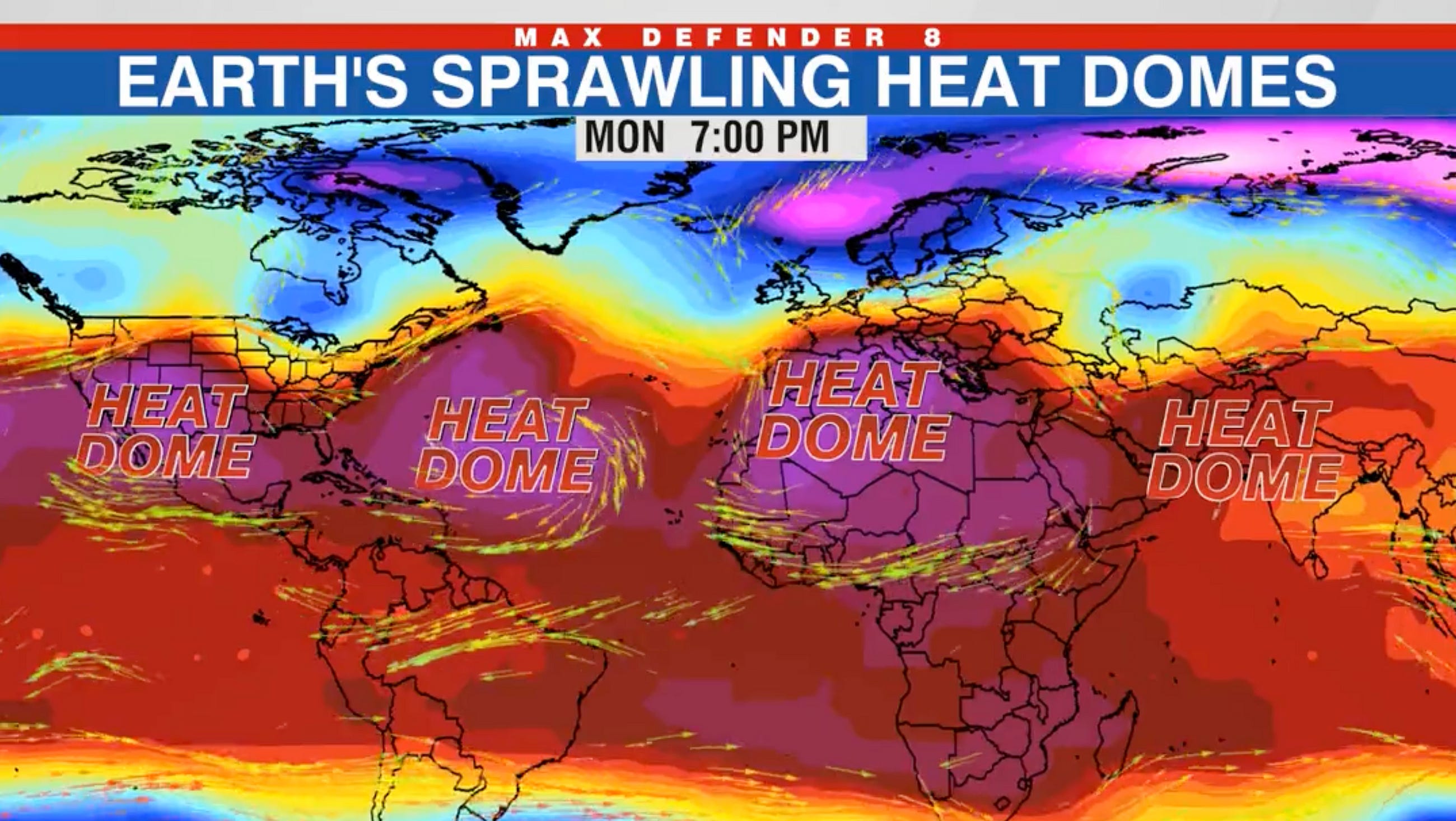
A shockwave is racing around the globe. Is this really happening? So hard, this fast? Just like…that? Suddenly, we seem to have entered a different age. Climate change appears to be ravaging the globe. A heatwave stretches from the United States to China through Europe. Canada’s still burning, from coast-to-coast. The smoke made air quality in Washington DC some of the worst in the world — again.
That shockwave is made of bewilderment, concern, and even fear. People sense that something’s changed this summer. A natural disaster here and there is easy enough to dismiss — but all of this, everywhere, all at once? That feels like a phase shift has taken place. It’s not as if we have “a” heatwave, or “a” fire. We have these events now at continental, hemispheric, global scales. Canada’s on fire — and as Europe scorches, shattering records, it’s all but sure to have a desperate fire season, too.
The average thoughtful person’s caught in the middle of all this, wondering and worrying. A lot of things, I’d imagine. And adding to the confusion is a sudden campaign by those who are desperate to portray themselves as sober against the idea of “doom.” Yet do you see anyone much saying that we’re “doomed”? I don’t. Sure, there are a few fringe figures here and there who think civilization should end, and have given up the ghost. Fair enough. But by and large, what’s finally beginning to take place is something long, long overdue. We’re noticing climate change, and beginning to discuss it. It’s entering our general awareness, at last, what Jung might have called a collective consciousness.
And that idea finally becoming real to people — instead of some abstraction, theory, or set of events in a distant future — is a shock. Toffler called the future suddenly arriving “future shock.” In this case, we’re experiencing perhaps history’s greatest form of it yet: climatic future shock.
Suddenly, we’re beginning to understand that our planet will never be the same again — and questioning what that means for our civilization. That’s a good thing, by the way. But warning people away from wondering just how apocalyptic it’s going to be — this new form of future shock — well, that’s of dubious value. In our culture, sadly, those who raise alarms instantly get dismissed as hyperbolic alarmists. This makes us more vulnerable to shocks, more fragile, as a civilization, than we should be.
Still, we resist the understanding that we’re entering an Age of Extinction, and that doesn’t mean we all die off tomorrow — but it does mean what it says, an extinction event is taking place, one of a handful across deep time, and our civilization has never experienced such a thing. For now, it’s a good thing that climate change is finally entering the collective conscisouness — understanding extinction, and what it really means, implies, suggests, demands, not just its caricature, is the next step, and that may well take time…time we don’t have.
Right about now?
There are three things that every sensible person should do.
Learn, think, and act.
Let’s take each of those in turn. Chief among what people are probably wondering this summer is: where do we go from here? How are things like…the events of this summer…going to impact everyday life? The answer to that, of course, is that they already are. Some examples: “My City Has Run Out of Freshwater. Will Your City Be Next?” “Facing a Future of Drought, Spain Turns to Medieval Solutions.”
It shouldn’t be hard to spot the theme. System failure. Water systems are an obvious weak point as the planet burns. Nowhere, really, has a water system robust enough to really survive the next century — yet, anyways. Those examples are from South America and Europe — another one is the glaciers of the Himalayas, which provide drinking water to maybe…two billion people. If they melt away? Shudder. But here’s another, even more vivid example of system failure: Canada’s burning from coast-to-coast, more or less. We don’t know how to put out fires on that scale. No idea, short of sending in troops upon troops, and just…raising an army…against megafire. That’s system failure hiding in plain sight: we’ve known for a very long time that megafires would erupt — the burning of the boreal forests is a classic climate tipping point — and yet we haven’t built a system to combat it. Even on the superficial level of “putting out the fire,” let alone “stopping them from spreading.”
System failure exists at this deep level, and it’s spreading — incredibly fast. Canada’s overwhelmed by the scale of its fires because nobody expected it to happen this fast — and that is why systems are failing. Let’s take another example: insurance. In the last few months — just months — some of America’s major insurance companies have simply stoppedoffering policies in California and Florida. Insurance premiums are skyrocketing, of course, there. That’s another system failure: we’ve known, too, for decades, that when climate change really hit us, insurance companies would either go under, or retreat, and yet, we haven’t built systems to…fix the problem.
Because what even is the problem? Shall we try to incentivize people not to live in vulnerable areas? Or just let them go without insurance? Either way, society picks up the tab, and suddenly, everyone else gets poorer. When insurance companies leave climate-ravaged areas, and then disaster arrives, it’s the public purse that eventually pays for disaster relief. It’s not immediately clear how to solve this problem, because it’s still blurry what the problem is. We can hardly stop people living where they like, after all — or where they can afford, at least in the short term.
And yet that illustrates what happens after system failure. Things get expensive — or unavailable — fast, beginning with the basics. As basic systems go down, of course, prices rise, and some things become unattainable. Right now, it’s insurance. But it’s also clean air. In many places, it’s becoming water. Isn’t this apocalyptic enough? We’re not talking about the future here — just the present, which is visible to everyone with eyes.
All of that’s just a little introductory to think about: where do we go from here? Now let’s formalize that a little bit. As we enter this age of climate change proper, where its mega scale impacts finally arrive, with a fury that shocks and startles many, there are probably a handful of paths we can take. Of course, everyone knows that, but we’re going to get…a little…more real…than such discussions often do.
Keep reading with a 7-day free trial
Subscribe to HAVENS to keep reading this post and get 7 days of free access to the full post archives.