
What Does the Age of Extinction Mean? Four Words: Dying Planet, Shrinking Economy.
Why We’re Underestimating Just How Much Trouble Our Economies Are Really In
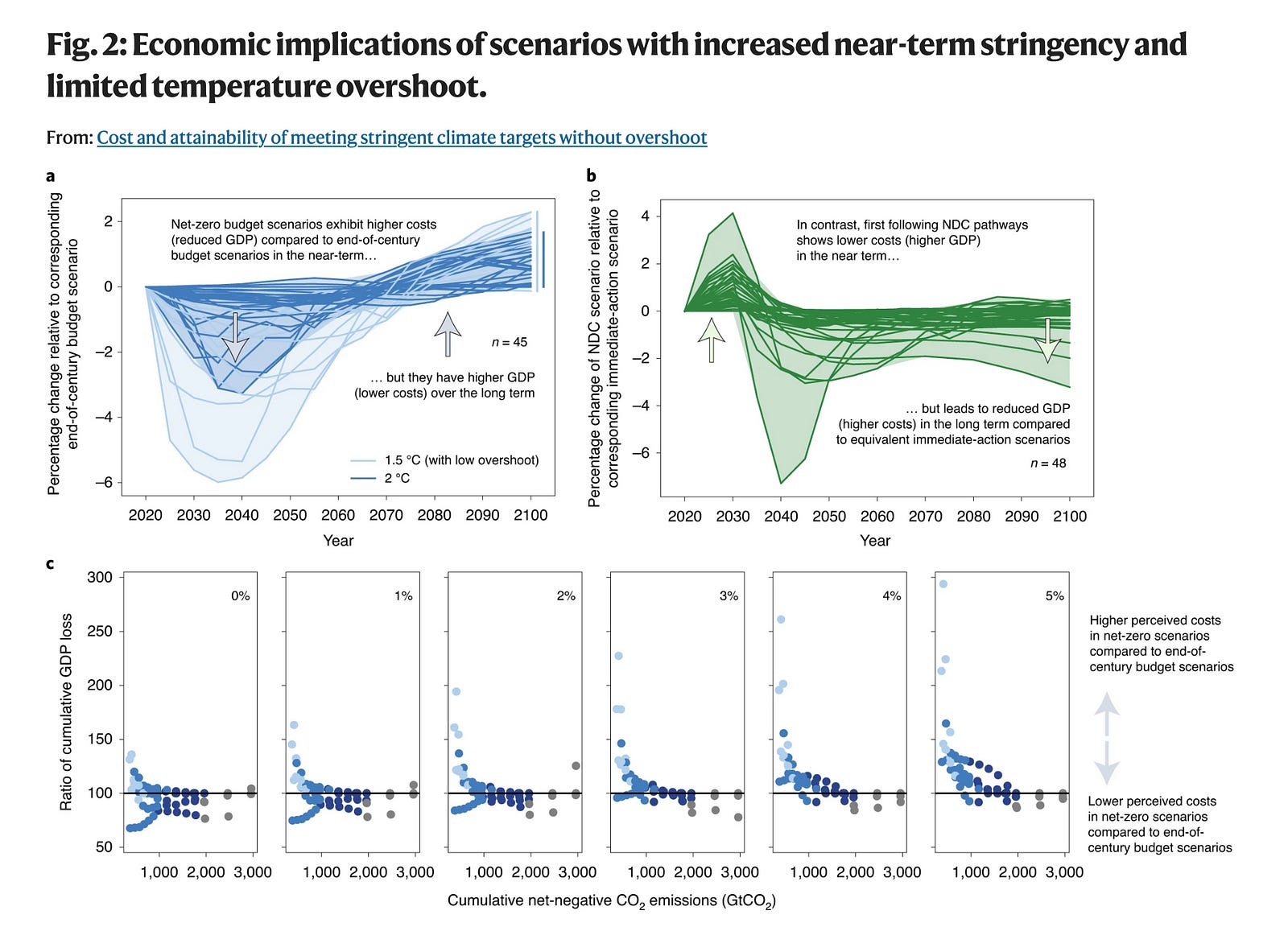
By now, you probably want to know. How much trouble are we really in? Our economies. Societies. Over the next few decades. From the wave of shocks that’s hitting us, and is only rapidly intensifying — the Age of Extinction. I’m going to give it to you straight, because you deserve to know, even though it’s going to be, yes, a little scary — and a little nerdy. We’re going to delve into the chart above, because it’s one of the best summaries of where we…unfortunately…are.
How’s your wallet these days? Feeling the pinch? That’s what I thought. Let’s begin with the economy. It’s forecast to basically stagnate in real terms for the foreseeable future. It’ll grow, says the IMF, at maybe 2–3 percentish. But that’s not what you’re experiencing. You’re experiencing something much worse, more troubling — the beginning of the reality of the Age of Extinction.
On the one side, you’re hammered by skyrocketing prices. On the other, by wages that, even if they go “up,” don’t nearly rise anywhere fast or high enough to match. And so in real terms, you’re getting poorer. Fast. Hence, more and more people are using buy now, pay later to afford…the basics. Groceries. Utilities. Medicine. That’s not good, but I want you to understand what this really means.
The 2–3% “growth” — as tepid as it is — what is it? Well, that’s going to — you guessed it — corporations, whose profits have never been higher, and the super-rich, who “own” them, via shady “vehicles” and “hedge funds” and whatnot. You, the average person, are beginning to experience the reality of negative growth.
That’s not strictly “degrowth,” if you’re an advocate of that sort of thing, so let’s skip that angle for now — we’re just after a very, very clear understanding of the big picture. It goes like this. The average person is now experiencing the reality of a shrinking economy. That is what “your real income is falling” means. Sure, there are those profiteering atop this — hence, that tiny growth rate, those percentages are what’s skimmed off the top, essentially. But for the average person? The economy is now shrinking.
That is a very Big Deal.
Because the consequences of that are as fatal as they always are. The Great Lesson of the 20th century? Economy shrinks, bad guys take over. Violence, lunacy, hatred rule, again. Regression becomes the rule. Fascism breaks out. Authoritarians rise. Demagogues point the finger at scapegoats, frightened, numb masses desperately follow, screaming in rage. Sound like the world today? It should, because the theory is proving true yet again.
Now. The question is: will it ever get better?
Take a hard look at the chart above. It’s cutting edge research, some of the best I’ve seen. I know it’s complicated, so I’m going to explain it. It shows us, more or less, the change in GDP over time, in two cases, for one scenario. I know, I know, bear with me. The scenario here is “overshoot” — that means temperatures rise, and then they come down, because, well, we did something about climate change. That’s the good scenario — because temperatures come down. In this scenario, there are two cases — one, we get serious, aim for “net zero” (don’t worry about that, just see the point) and that has costs now, but helps later. In the other, we don’t do nearly as much, and that doesn’t have so many costs now, but does later.
Now. What do you notice in either case? LOL, take a look at the chart, just the message of it. In either case, GDP growth hits zero near the end of the century. And that’s a good thing. Because in the first one, we do stuff now, it costs us right now. But in the other one, it costs us a decade or two from now. Either way, it’s a very long time until we have anything resembling stable, growing economies again. It takes maybe until 2070 or 2080 for us to get back to no growth, and that’s a good thing.
Keep reading with a 7-day free trial
Subscribe to HAVENS to keep reading this post and get 7 days of free access to the full post archives.