
The Great Weirding of Our Economies and Societies
That Weird Feeling in the Pit of Your Stomach? It’s Real. It’s Risk. And It’s Growing Out of Control.
What exactly do the 2020s hold in store for a weary world? There’s a problem that nobody can figure out right now, and it’s called the economy. Take America’s as an example: it just added an astonishing number of jobs, and the unemployment rate’s now at lows not seen since the late 60s, or around the time the US went to the moon. And yet more and more Americans are shopping at dollar stores, struggling to make ends meet — precisely because in that very report, incomes barely budged at all. So…what’s going on here?
Economists are a little bewildered by this. Are our economies going boom…or bust? Are Big Tech’s mega-layoffs a sign of things to come…or just an anomaly? How can it be that jobs are roaring, but wages aren’t budging? None of this makes much sense. And if you look at the economy qualitatively, that picture makes even less sense.
In America, again, stories abound by now of couples earning somewhere in the region of half a million dollars between them…who still can’t quite make ends meet. Cry me a river, says the rest of the country, who’s on an average household income of maybe $60 or $70K, and are also barely keeping their heads above water, if that. And the rest of the world looks on at this, just as baffled. Half a million dollars…in earnings…for a household? That’s a lot of money, comparatively speaking, and yet if Americans struggle on that…the prosperous ones…while the people formerly known as the middle-class turn to dollar stores and side hustles as they fall into debt…what’s going on here?
Welcome to the Great Weirding of the 2020s. Let me try to explain, as succinctly as I can, why our economies are in this strange place. Boom and bust, all at the same time, seemingly, no amount of money really enough to buy stability or security, right down to the baffling reality of mega-layoffs here, while there’s huge demand there, and none of that leads to much real growth for people.
Real growth. In living standards. Remember that? It’s becoming a distant memory, because right about now, the world just hit an historic turning point: progress itself, for the first time, since the Industrial Revolution, flatlined, and is now going into reverse. That’s a centuries-long trend — going the wrong way. That’s what we’re living through, and when I put it that way, the Great Weirding should begin to perhaps make a lot more sense.
Now. Our economies are going through what is about to be the greatest supply shock in human history. All of it. It’s already unfolding. Ten dollars for a dozen eggs? That’s because of avian flu, but avian flu is of course an effect of climate change — pandemics growing as the temperature rises. Supply shock. Let’s take another example: the Colorado River’s drying up, and it’s eminently unclear how the American West is going to continue to survive, from agriculture to… just being habitable. Another example: Pakistan’s mega-monsoon shattered its economy, and it’s one of the world’s largest suppliers of textiles, right down to your jeans and bedsheets.
The early 2020s were the age that the mega-scale impacts of climate change arrived. From mega-weather to pandemics to crop failures, droughts, and famines. We in the rich West see these things happening to distant places and don’t quite fully grasp how deeply they affect us, too. Because the global economy is interlinked and interwoven. A mega-monsoon in Asia now means that the prices of textiles and microchips rise across the world.
We are only at the beginning of this historic supply shock. Nobody knows how bad it’s going to get, but this is only 2022, and prices are still skyrocketing. Especially prices for the basics, which show no signs of slowing down, really — food, energy, water, and so forth. That’s precisely because we’re hitting our limits of being able to provide these things. They’re growing scarce — and that brings me right back to the Great Weirding.
When I say Great Weirding, many will know, intuitively, what I mean. Everyone these days has this feeling of insecurity and instability, no matter how much they’re earning — unless they’re billionaires. It’s profoundly weird to see things like couples earning $500K a year and still complaining about the bills, or to see a nation like America’s once-vaunted middle-class shopping at dollar stores, or to see what economists call a roaring jobs market…in which, sure, people can swap jobs a mile a minute, and even make more and more money, and yet, it doesn’t seem to ever be enough to buy what we’re really all after, which is stability and security, financial independence, which underpins confidence, happiness, trust, and optimism, at least in our modern societies. It’s deeply weird to see economies that are said to be booming — and yet everyone’s right at the edge. And it’s deeply weird that our economies can’t seem to make up their minds if they’re going boom or bust anymore.
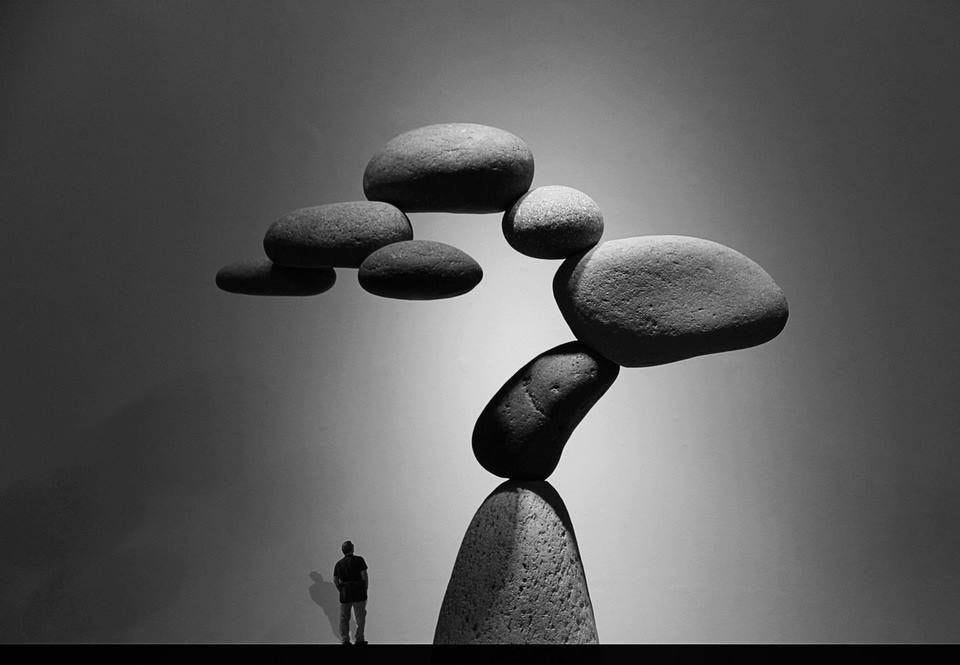
That is because we’re now on a knife edge. This is what “risk” means, in practice. It doesn’t mean that calamity’s here, but it does mean that it could be around the next corner, and as such, things are that much more precarious. Because they’re that much more precarious, everything feels uncertain. Fraught. Shaky.
Risk. Anything could happen. And that’s not a good thing. Sure, there might be a mini-boom, because of this drug, or that technology, or because that kink in some supply chain worked itself out — but what happens next summer, when the next mega-monsoon takes out the world’s second, third, first largest supplier of…leather…chemicals…fertilizer…anything? This is what risk means, in the real world.
Keep reading with a 7-day free trial
Subscribe to HAVENS to keep reading this post and get 7 days of free access to the full post archives.