
The Exploitation Economy
How Big Tech is Eating Through Our Economies, Societies, and Cultures
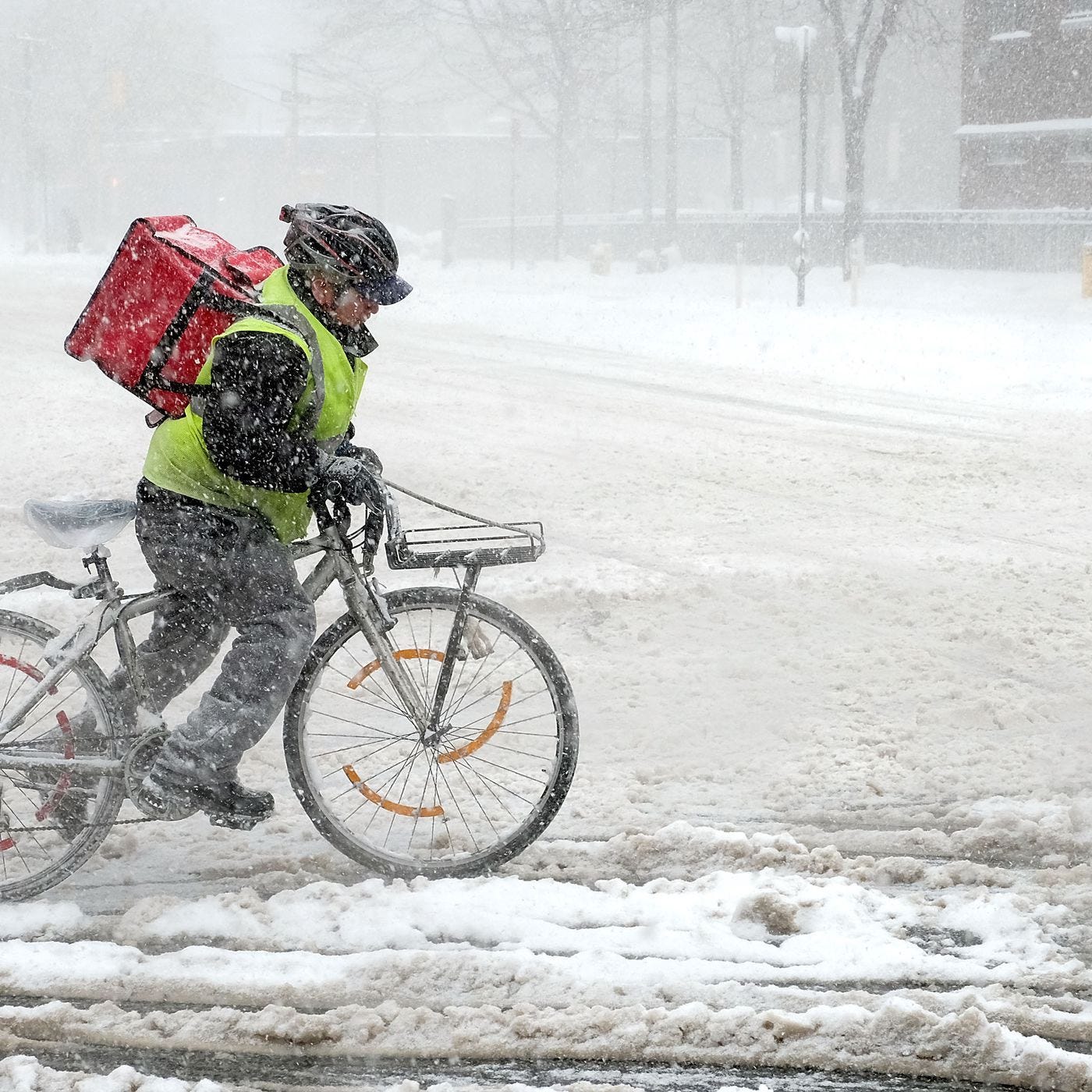
Over the last grim year, as the pandemic gripped the world, our lives changed. Our economic lives. Locked down at home, we turned, en masse, as societies, to platforms and companies which heretofore many of us had used maybe once in a while — but certainly not habitually. These platforms became integral parts of our lives — delivering our food, clothing, and even medicine. Instacart, Deliveroo, and so on. The canonical example, of course, is Amazon.
And now, as life is returning to normal, the question should be asked: is any of this good for us?
We’ve developed what I call an exploitation economy. To be fair, every economy, at least every capitalist one, is exploitative. Capital has always made the life of the average worker bee pretty miserable. But this is technologically driven, deregulated, and economically implosive exploitation in a new way, on a different scale, of a novel order.
The exploitation economy is an illusion, a utopian one, of neat and orderly technological markets, masquerading as just and even noble, while ripping the heart and soul out of economies, stalling and reversing the development of modern societies.
The first aspect of the exploitation economy that’s different — really different — from almost anything that came before it is algorithmic management. Sure, you might have been an exploited prole before — but at least you had a boss. Someone to maybe organise against, fight, bargain with, negotiate with, object to.
Now there’s just the algorithm. And that’s not just really, really different — it’s really, really bad. The algorithm is faceless and nameless. It exists in an impersonal ether, untouchable, unknowable. It’s the construction of human. hands, accumulating decades, if not centuries of bias and bigotry and so forth, and hardening them into unchangeable “code.” And that code is your boss.
Let’s take the canonical example, Amazon. Jeff Bezos isn’t sitting there actually, well, doing much of anything. He’s planning dumb trips to Mars and so forth. He can do all that precisely because he’s not a normal CEO in any historical terms. He doesn’t have any real work to do, because the boss of the average Amazon worker is an algorithm.
Not just an algorithm, but “the” algorithm, which is several of them. And the algorithm is always watching you. That’s the second aspect of the exploitation economy which is really different: a kind of totalitarian surveillance.
Let’s talk about the algorithm on the supply side. There you are, an Amazon employee working at some warehouse. Your job is just like any other working-class warehouse job in history — sorting, stacking, moving, and so on. Only now the algorithm is literally monitoring your every action. How long did it take you, on average, to sort the last three items? Sorry — that took 0.5 seconds too long. Ding ding! Your personal watcher beeps. Speed it up!
This kind of surveillance has always been the goal of corporate types. But it’s never really been possible before. It was too costly. You’d need to hire a hundred supervisors to keep tabs that close on every employee. But now? Thanks to technology, corporations — exploitation platforms — can do it easily. Amazon can monitor every single worker’s every single action, every single microsecond. Uber knows where every driver is. Deliveroo knows how long it takes every single delivery, right down to the nanosecond.
That gives exploitation platforms a massive, massive informational edge. They know everything — workers, on the other hand, know next to nothing. How much does that manager make? Nobody knows. Will you have a job tomorrow? Wait, you don’t have a job now.
That brings me to the third aspect of exploitation platforms: they don’t employ anyone much. Deliveroo recently tried to have an IPO, and it flopped. Because institutional investors walked away, leery of a recent British court’s ruling that Uber drivers should be employees. What if that happened to Deliveroo?
The business model would become unsustainable in a heartbeat. What reveals exploitation platforms as exploitation platforms is the simplest and most cutting observation of all. If they had to treat the legions of people working for them as employees, none of the them would be profitable at all, ever.
In other words, the only reason these platforms exist at all is because they can exploit. They can treat their worker bees as “contractors” or “independent entrepreneurs,” who are therefore then responsible for their own healthcare and retirement and so on. Without that cost advantage, these platforms could not exist at all. Their profits would hit zero, and go negative in the blink of an eye.
But that is exploitation. It’s true that it’s nice not to have a job. The regular hours and drudgery and pointless meetings that go with it. But it’s truer to say that in the absence of these platforms providing people who work for them with basic benefits, society has to do so. In other words, we are all subsidising the exploitation economy. By how much? Nobody knows, because the amount is so massive. Amazon is a top employer of people on food stamps in many American states. Think about that for a second. Amazon doesn’t pay people enough to live on, so we have to, or else they starve.
Go ahead and tell me that’s not exploitation.
The information advantage that exploitation platforms have is weaponised by them.
They bill themselves as “markets” — like Uber and Deliveroo. But in fact they are nothing of the kind. They are monopsonists. A market is a place where many-to-many transactions occur. Not just those between a single buyer and many sellers. What’s happening at exploitation platforms is that people effectively work for them. We speak of “Uber drivers” and “Deliveroo guys” for a reason. That is who they sell their labour to.
There’s not a market here at all, in other words. Maybe, in the most generous circumstances, there are a couple of exploitation platforms, maybe three, competing. Deliveroo, JustEat, GrubHub. More often, there’s just one. Uber. Amazon. That is not a market — it’s a monopsony.
On the other side of this peculiar arrangement are millions of worker bees, who are selling their labour to a tiny, tiny handful of platforms. When millions of desperate people are selling their labour to a tiny few, it doesn’t take a genius to imagine what’s going to happen. Massive price competition ensues, which drives wages down to rock bottom, and then below it. The dirty open secret of the exploitation economy is that you can’t make a living this way, as a person who’s not an employee of these platforms, but works for them anyways, as a sole seller of labour to them. You are exploited to the hilt by the structure of this market: platforms which are monopsony buyers of labour at an incredible, historically massive scale.
That peculiar structure — a handful of monopsonies buying up the labour of whole sectors of an economy — is reminiscent of the Soviet Union. Far from being some capitalist ideal, it’s more like central planning on a vast, bizarre, upside down scale. Why? Well, think about what that means the pricing structure is.
Exploitation platforms are lowest-bidder markets. There are many kinds of markets. Prices are “discovered” in many ways. Auctions are one example. Stock markets another. Bazaars still another. Exploitation platforms are what economist call “reverse auctions.” I say: “I’ll sell my labour for this little,” desperate as I am. But there’s a million of me, or more — and just a handful of buyers, maybe one, two, or three. There’s always going to someone who’ll underbid me in this reverse auction. Bang! That is how prices on these platforms hit rock bottom — and then surge past it.
Why would anyone be willing to sell their labour for less than they can live on? To any good or sane economist, that is a clear indication that something is very, very wrong with a market structure. Any functional market should have a rock bottom, which is the cost of living. Labour should never drop below that price. If and when it does, something has gone incredibly badly wrong. People are being systematically exploited, by some kind of abusive market power.
And that is what’s happening, en masse, in the exploitation economy. The market power the exploitation platforms wield is incredibly vast. It’s made of the information advantage we discussed above — the totalitarian surveillance of employees. It’s made of a monopsony structure, where there are a tiny handful of buyers for the labour of entire sectors of the economy. And it’s made of a reverse auction mechanism, where I am forced to underbid you.
This is something close to the capitalist dream. It’s pure, unmitigated power over labour. And yet you and I know something is badly, badly wrong with all this. What, precisely?
One hidden cost — “negative externality” — we’ve already discussed. Exploitation platforms beat the price of labour down past rock bottom, below the point of the cost of living, and so the rest of us have to subsidise their employees en masse, whether through food stamps or roads or bridges or “welfare” or housing. The savings are an illusion. The cheap, cheap price you pay to Amazon just hits you in the form of higher taxes — and nonexistent public goods.
What happens when entire sectors of the economy are forced to bid down their labour so low it’s below the cost of living? There’s nothing left over for them to invest. Not just invest in stocks and bonds, but invest in a functioning society. If I’m making such a pittance at Uber or Amazon or whatnot, or all of them combined, that I can’t even live, then how I am going to fund a society which has healthcare, education, retirement, childcare, transport, and so on, for all?
I can’t. That is how societies enter the vicious cycle of economic depression and collapse. The earning power of the average person is hollowed out, and they can no longer afford to invest in society itself. That means everyone goes without public goods. Society stops being a modern place with expansive public healthcare and retirement and childcare and so on for all — or is incapable of becoming one.
Bang! The spiral of social collapse has set in. That’s the story of modern day America, in so many words.
We’re almost done, but not quite. There’s one final aspect of the exploitation economy that needs to be discussed and highlighted. Algorithmic consumption. Algorithms aren’t just your boss, if you’re a prole working in the exploitation economy.
If you’re a consumer in it, they shape your life, too. Algorithms have incredible, outsized power. Consumers don’t have the time or energy to surf through the endless range of choices on offer. You can spend hours on Amazon looking for a…lightbulb. If you really want. Or you can just choose the “recommended” one. You can spend hours on YouTube looking for a video — or you just watch what the algorithm pops up.
Just as algorithmic management is ripping the life out of the economy, so algorithmic consumption is ripping its soul out. It’s creating monoculture which lack diversity and intellect and curiosity. Algorithms are positive feedback mechanisms — the winner wins more. And so, just as on YouTube, they reward sensationalism, childishness, stupidity, rage, violence, and hate.
Algorithmic consumption leaves little to no room for criticism, thought, reflection, interest, sustained and lasting engagement with a thing that challenges and enlightens, like a great book, artwork, song. Everything is a commodity, consumed at light speed. If it doesn’t instantly gratify — what good is it?
Take music in the exploitation economy. Musicians can’t make a living anymore. And yet music has never, ever been dumber — more simplistic, childish, anodyne — than in the age of Spotify. Rock’n’roll was three chords, sure, but it wasn’t made by a computer program. Kids in garages made it. With their bare hands. It had some cultural soul in it. It meant something, if only to those kids and their friends. Spotify music mostly is just made by and for computer programs, operated by “producers” who couldn’t play a guitar or piano if it fell on them — it’s designed to please the algorithm. Literally. The “producers” will spend hours just on maximising how loud a song is for the algorithm, because louder sounds stimulate us harder and faster.
Culture now exists in a null space. Like that song? Give it five stars! Don’t like it? On to the next one! What room is there to grapple with an artists’ larger body of work, sensibility, message here? None. Relationships don’t develop. Culture can’t happen this way. “Kids these days” — sorry to be a grandpa — don’t know what they’ve been cheated of. You can tell me that a Beatles or an AC/DC or a Giorgio Moroder would make it to the top of Spotify…but I wouldn’t believe you. And if they did…so what? What would it mean? On to the next cultural artefact as interchangeable, faceless commodity.
Artists are just cultural Uber drivers or Deliveroo guys in the exploitation economy — their only job is to deliver this instant’s gratification. No wonder they can’t make a living. They are selling their labour in an atomized, fragmented, algorithmic market for instant gratification that places no value on it to begin with.
This kind of commodified “output” means nothing culturally whatsoever. We’re one step away from AI just writing the cookie cutters songs — books, shows, films — that the exploitation economy demands. There is no cultural meaning left in any of that at all. No wonder “kids these days” are so depressed — they don’t have a culture, and they don’t even know it. It’s been subsumed and replaced by algorithms, which chew up any meaning, purpose, depth, truth, anger, rebellion, defiance, and replace it with dopamine hits.
It used to be a rite of passage to throw a middle finger up at the system. But who’s the system now? Who’s the man? Nobody is. The algorithm is nameless and faceless. You can’t give it the finger. It doesn’t care. There’s nothing to rebel against, nothing to defy, nothing to scorn for its stupidity. The algorithm will just take all, and give it a low, low rating. You’ll be screaming into the void, while today’s best algorithm-gaming traders will walk away laughing, having sold the masses the exciting, violent, stupid, brutal, idiotic thing that delivers the most dopamine, the fastest. A picture of a giant butt? What about a video about a shopping spree for a giant butt? Or how about a song that sounds like baby music, except it’s about a giant butt?
Good luck with that teenage rage. The system has disappeared into the etheric mist. It’s made of light beams you can’t catch, and server farms you’ll never see. There’s nothing left here but a fake plastic smile. You have to play this game, even if it kills you, as you compete against everyone else for a sense of self-worth, meaning, purpose, truth.
The exploitation economy is basically a vast, endless, addictive dopamine delivery system, in flimsy disguise. But there are easier ways to do that. No wonder it depresses the hell out of so many of us, as in, makes our rates of suicide and depression and loneliness soar, especially if we’re young. If the only choices are dopamine overload or nothing at all…what place is there for truth, beauty, dignity, freedom, courage, grace?
There’s no room for any of those at all in the exploitation economy. They’re costly hindrances to the ultimate goal of perfect efficiency, mindless consumption, human beings made algorithmic automatons of both production and consumption.
But hiding behind the algorithm are the puppet masters of this dumb game, which is ripping away our economies, regressing our societies, and eviscerating our cultures. The tech bros and so forth who really, really think this is the way life should be. You should just be a techno prole, selling your labour by the lowest bid, below even the cost of living, to a gigantic monopsony in the sky, which repackages it, and sells it in the flashiest form that delivers the most immediate gratification.
For all that, they tell us, they deserve to earn billions and be lauded as geniuses. The only question left I guess, is: are you dumb enough to believe it?
Umair
April 2021