
The Coming Age of Climate Regret
Our Future Selves Will Ask Our Present Selves: Why Didn’t You Do More To Stop This?
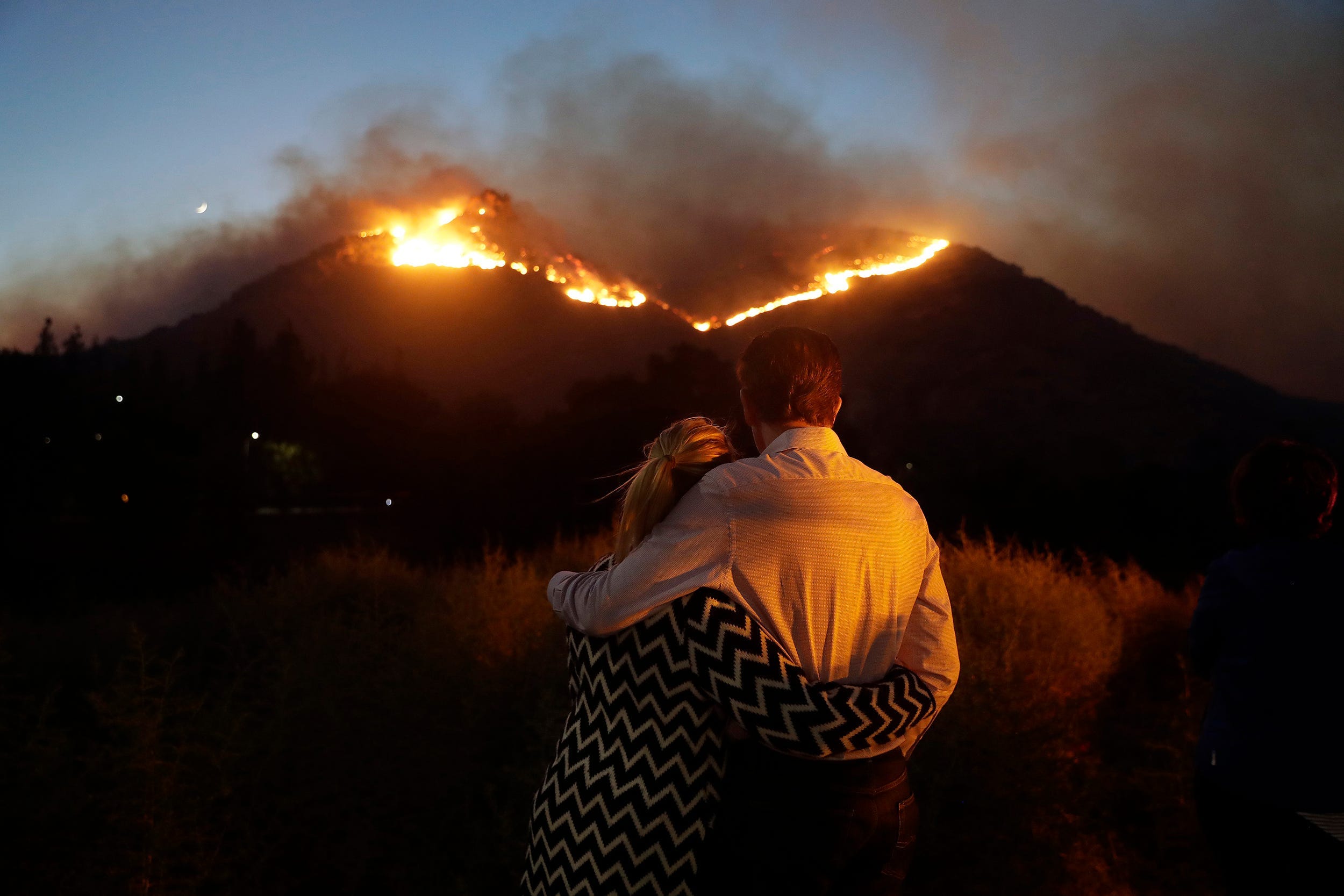
Red alerts across Italy. The Acropolis, closed — because of the heat. In America, a heat dome stretching from coast to coast has arrived. Temperatures are soaring. That’s after the Northeast just flooded. Canada — still on fire. Ocean surface temperatures continue to climb off the charts.
This is the summer climate change arrived, with a vengeance. But next? Next will be the coming age of climate regret. Why didn’t we act fast enough to stop this? Why were seduced by nonsense instead — like far right politics, which turned right around and only made the problem worse? Why did we let things get this bad? This bad won’t mean: as bad as things are now. It’ll mean much worse.
Imagine just three summers ago. Now imagine another three summers from now. Now five. Now ten. The speed and scale and fury with which our climate is undergoing profound transformations is leaving even scientists shocked and bewildered — and the average person is squarely in the crosshairs. So go ahead, imagine ten summers from now. How much worse will things be if all that happened this summer’s already happening, and just…goes on…intensifying?
Let me make that concrete. Canada burning: those are megafires that stretch the width of an entire continent. Think about that for a second, and then think about this: we have no idea, really, how to put them out. The heat dome settling over the United States, meanwhile, is also going to span the the width of an entire continent — reaching from California through Texas across to the Gulf Coast and to Florida. Now you know what I mean when I say “mega-scale impacts” of climate change — on continental scales.
This is — just — 2023. Imagine 2033. Can you? Is it hard to even try to understand how much worse things could get?
We are headed towards a coming age of climate regret. Let me give you a quick model for it.
Look at poor beleaguered Britain. It’s hard to overstate how much trouble it’s in. It has a collapsing water system, healthcare system, retirement system, a shrinking economy, and a seemingly fatally broken politics, inured to it all. The cause of all this? Brexit. And yet it wasn’t so long ago — just a scant five to seven years — that Brits were in a mania about Brexit. Not all of them, sure, but as a society — certainly. Brexit was cheered, applauded, in what’s now beginning to be understood as a collective delusion, a strange nationalist frenzy.
How intense — insane — did it get? Critics of Brexit weren’t even invited on the BBC to discuss it — the mania went that far: it became a taboo to do anything but manically, frantically, obsessively cheer on Brexit. In its heyday, you’d be hard pressed to find anything but bizarre propaganda, which said, over and over again, that scapegoating Europeans, and breaking off with Europe, would suddenly magically fix all of Britain’s problems, that xenophobia and spite were the missing answers. Britain First!
And now Brits regret Brexit. Only 9% now think Brexit was more of a success than a failure. And 56% percent of Brits think it was a full on mistake, that Britain should rejoin the EU, and so on. Brexit was the word that defined Britain’s 2010s — but Bregret is what’ll define its 2020s, and quite probably its 2030s, too.
I want you to understand just why I raise this example. Brexit was all-consuming. As far as power was concerned, there was no possibility that Brexit could be a mistake. None. It wasn’t just the conservatives who created this foolish idea that backed it — startlingly, even the opposition did. Their version of it was called “Lexit,” aka “Left Brexit” — how funny is that?
Keep reading with a 7-day free trial
Subscribe to HAVENS to keep reading this post and get 7 days of free access to the full post archives.