
Life During the Age of Extinction — And How It’ll Change
What It’s Going to Feel Like as the Planet Turns Against Us
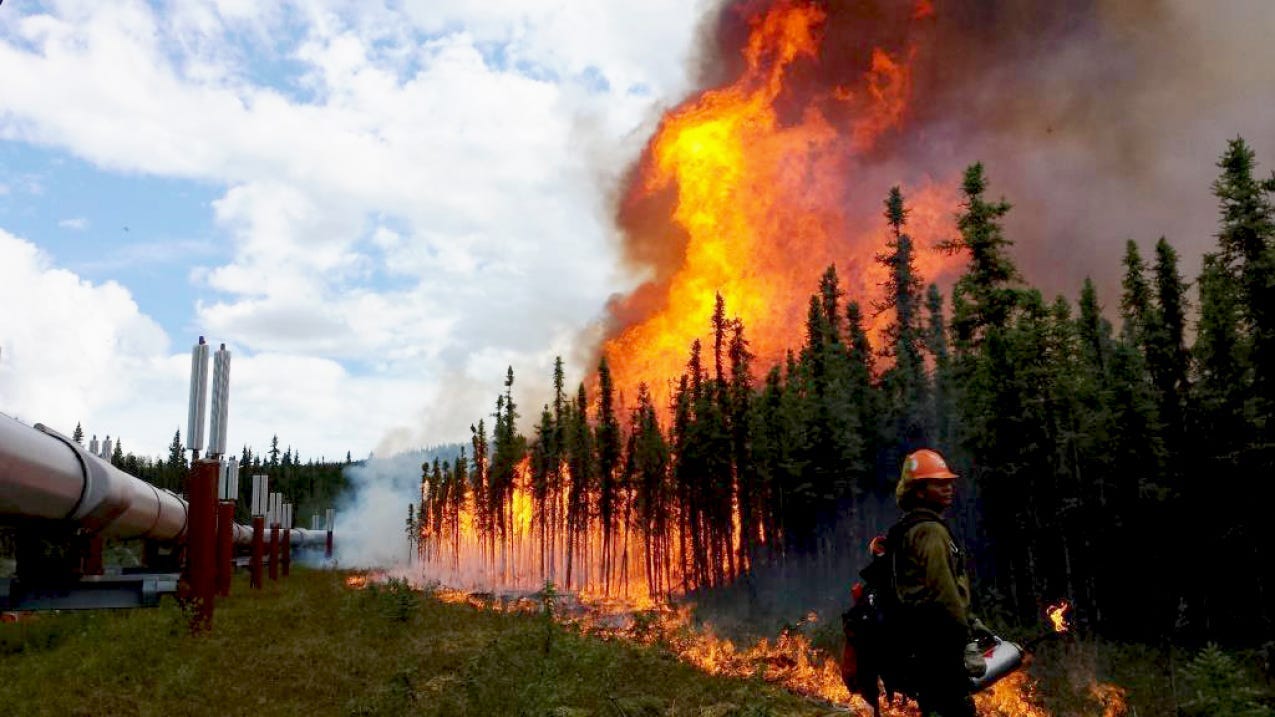
In the age we’ve entered, the age of extinction, what is life going to be like? One way to think about it is what I’ve begun to call in my head “World War P.” It’s going to seem as if the planet is at war…with us.
Human beings took their first steps about 300,000 years ago. And for that time, by and large, the planet has been “hospitable” to us. It’s presented with us bounty after bounty, treasure after treasure. Stories abound of how rich in life, for example, North America was, when the settlers arrived. Life for the human species so far — in this first chapter of its journey — has been easy.
That’s not to say that human beings haven’t had their struggles and strife. Certainly they have. But what confronts us nowis like nothing that has ever come before in human history, all 300,000 years of it, and certainly nothing remotely like what 5,000 years of civilization have known. A planet hostile to human existence.
What do I mean by that? I’m not “predicting” any of the above. You can already see it beginning to happen. From shockingly high levels of heat in the Indian Subcontinent to the way the extreme weather and wildfires have become the new normal. All of these are the mere beginnings of what is going to happen over the next decade or three. The planet is going to become hostile to us. And we have never, ever experienced anything like this before.
Already, the seasons are changing. Do you remember how they were not so long ago? When I was a child — just a few decades ago — spring was delicate, summer was refreshing, autumn was bracing, and winter was brisk. But now? What we once thought of seasons have already begun to transform. Now, summer is megafire season, autumn and spring are megaflood season, and winter is megastorm season. And while that might seem relatively innocuous now — we humans are eminently bad at imagining just how fast change really adds up. There’s no going back.
Imagine how much more intense all of these phenonema — and seasons — will be just a decade from now. Two. The rate of change is not linear. We didn’t really have megafires or megafloods even two decades ago. Now, they’re an increasing regularity. So imagine then entire seasons where they’re the norm. What does that mean?
It means that the planet is changing. It’s biogeography is altering — permanently. Megafire season is the emergence of Fire Belts ringing the planet. Megaflood seasons, that of Flood Belts. Megastorms — replete with tornadoes and so forth — again create whole new zones. All of these begins to shrink habitable human landmass. And, of course, the landmass available to us for our basic civilizational systems — food, air, energy, medicine, manufacturing, and so forth.
We humans are not very good at seeing change if it isn’t immediate. Our planet is now transforming, season by season, into a different one. That change is happening in an eyeblink in geological time — but we humans, with our mayfly lives, barely register it at times. And yet at the end of this process of transformation arrives a different planet. One that’s not nearly so friendly to human life, to human civilization. But one made of fire, flood, storm, and plague. It almost sounds biblical, and that’s how far back in humanity’s collective consciousness we have to reach to really register the almost mythological scale of what is upon us.
This planet — our planet — is now transforming, over decades, from the one we’ve known for 300,000 years, to a different one. From one innocently offering us an abundance of riches and resources to choose from, which we’re accustomed to, to one that will feel like it is actively trying to wipe us out.
Humanity isn’t really prepared for that. There is nothing in humanity’s experience which can prepare us for that. We’ve grown up for generation after generation with a certain way of feeling about the planet. It’s our friend, our provider, our parent — even if we take it for granted and abuse it and don’t often to stop to think about that unconscious image of it. But a planet that’s our enemy? That’s our foe? We have never, in 300,000 years, really thought about our home that way, because it has never been that way.
Keep reading with a 7-day free trial
Subscribe to HAVENS to keep reading this post and get 7 days of free access to the full post archives.