
Are We in a Climate Emergency?
Is That a “Doom Cloud” Stretching From Iowa to Italy…Because Canada’s On Fire?
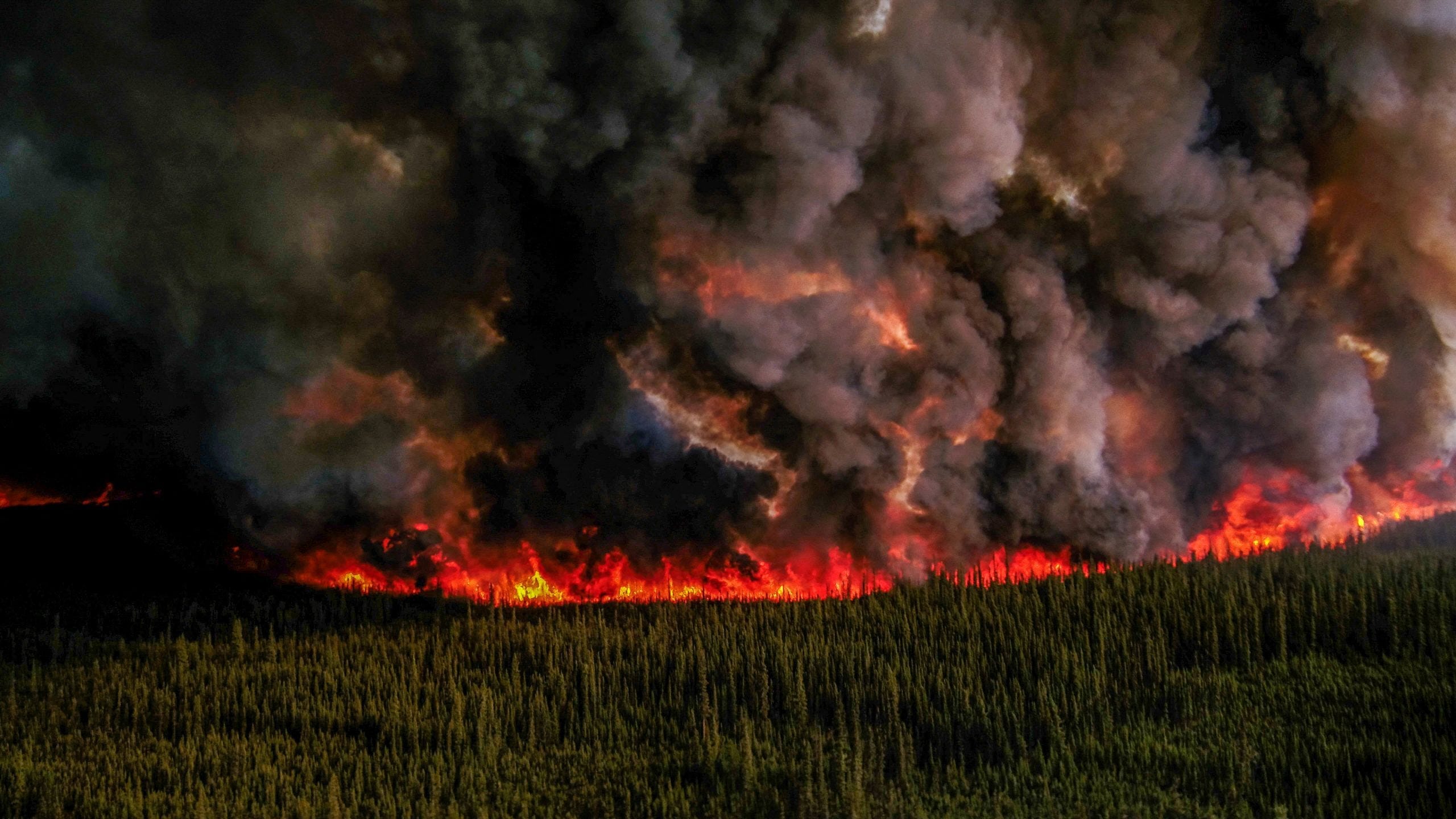
Think about something with me for a second. How much worse is it getting, each summer? “Worse.” More extreme. More surreal. More frightening. There’s a giant plume of smoke stretching over the Atlantic, all the way to…Italy. Canada’s on fire.
The haze was as bad as she could ever remember, said Ms. Toth, 48, a theater professor and performer. Her husband, who grew up in Pittsburgh when it was still a major steel town, agreed.
Ms. Toth said she intended to stay inside all day to keep her asthma from flaring up. She began feeling a tickle in her throat last night, “a little ball of cobwebs right in the clavicle,” and thought she was getting sick.
But then she received the air quality alerts on her phone. “It turns out it’s actually just a doom cloud,” she said.”
A…doom cloud. Funny. Poignant. Accurate? Half of America’s blanketed in haze and ashes, and the other half is experiencing a mega-heatwave, temperatures soaring, no relief in sight.
Are we in a climate emergency? Climate scientists will repeat those words, over and over again. What do they mean?
Let me give you another example. Uruguay’s running out of…water. The situation’s so bad that it’s recently gone to the desperate length of just…adding…salt water…to regular water. That, in turn, has created all kinds of other problems, as you might expect, from causing health emergencies to spiral, to making people drink far less water.
Is that a portrait of the future, you might be asking? Wrong. It’s the reality of the present.
Climate emergency. These words keep being said, and yet — do they really hit us yet? Why or why not?
Think of what an emergency is. “A serious, unexpected, and often dangerous situation requiring immediate action.” A dictionary definition as good as any other.
What’s the first component of that definition? Sudden. An emergency is something that happens…fast. So we speak of “emergency rooms,” which are places we bring people after sudden catastrophic events. Climate change has been predicted for a very, very long time now — the first research into it was in the mid 1800s. But since then, we — most of us, anyways — have lived in a kind of blissful…state of…postponement. Sure, even thoughtful people might have said to themselves. It’ll happen. But not to me. Or not now. Then, way, down the road, in the distant future.
Now think of ten years ago. Just ten. The same shows were on TV. The same musicians were pop stars. The same websites were on every screen. The world hasn’t changed that much, except in one striking, sudden, way. If I’d told you ten years ago, that Canada would be on fire, and half of America would be blanketed in haze and smoke, that New York City would be giving out free N95s at fire stations to help people breathe, that people would huddle indoors across the country…you’d have laughed at me. Alarmist! LOL — it’s not going to happen like that! Canada on fire — and American can’t breathe? Ha-ha!
And yet here we are. It’s that sudden. This fury of change. One decade, and it feels like we’re living on a different — much more hostile — planet. That’s one meaning of “emergency.”
What else does “emergency” mean? It also suggests a certain scale. A critical scale. We breathe a sigh of relief when someone’s brought to the ER — and it turns out to be just a minor faux pas. What’s the scale…of…all this? Here’s some context.
For some understanding of just how bad the fire situation is in Canada:
257 fires still burning out of control and record 20 million acres burned already. That’s 3x size of New Jersey or almost 1 Maine. Go look at a map, Maine is big.
That’s immense. And yet even that’s just the beginning of the scale we’re really talking. Let’s zoom out. The plume stretches to Italy, hovers over America, ravaging air quality for hundreds of millions of people…include Europe, and you’re on the way to hitting in the billion range. Zoom out again. Canada on fire is just one aspect of climate change. Then there’s the “heat dome” that’s settled over the American South. Nations and regions swiftly running out of water — from Mexico to Uruguay to Arizona, next up, the Indian Subcontinent, and when the mega-glaciers of the Hindu Kush melt? Nobody really knows how around two billion people are going to have water.
Keep reading with a 7-day free trial
Subscribe to HAVENS to keep reading this post and get 7 days of free access to the full post archives.